
By Jilong Liu (Greater Bay Area Bioinformatics Center), Lingqiao Song (McGill University/GA4GH), and Yixue Li (Greater Bay Area Bioinformatics Center)
As genomic data scales toward million-participant population cohorts, balancing open science with strict national data security regulations has become a global challenge. At the Global Alliance for Genomics and Health (GA4GH) April Connect 2025 meeting in Boston, the Greater Bay Area Bioinformatics Center showcased how its Biomedical Big Data Operating System (Bio-OS) is providing a blueprint for standardised, federated genomic research in China, and its potential to advance the global genomic research community.
The genomic landscape in China is characterised by large, high-quality datasets and ambitious population cohort initiatives, yet it is governed by fragmented regulations including provisions on human genetic resources, personal information protection, data security, and cyber security. As a result, sharing genomic data — whether across borders or between domestic institutions — remains a significant challenge for precision medicine collaboration.
By integrating GA4GH technical standards and policy frameworks with Bio-OS, Greater Bay Area Bioinformatics Center has moved beyond the traditional data-sharing model toward a more practical, controllable, and secure federated approach, enabling collaboration among domestic research centers and opening pathways for approved, legally compliant cross-border data access.
“We are building a ‘data stays, code moves’ environment that provides the standardised, high-security backbone for multi-center collaboration on national cohort projects,” said Professor Li Yixue, Director of the Greater Bay Area Bioinformatics Center. “Our goal is to ensure these strategic initiatives comply with national laws and regulations while maintaining the highest standards of international interoperability.”
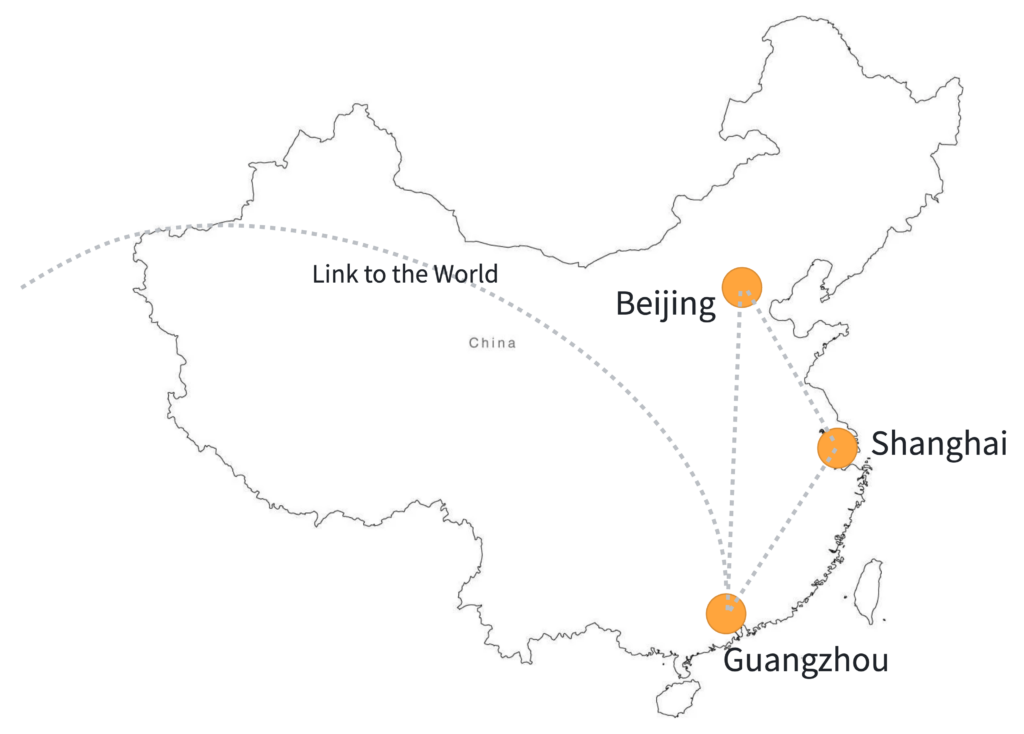
Bio-OS is an open-source “biological operating system” framework designed from the ground up to implement GA4GH standards. Specifically, Bio-OS can be deployed across different institutions to form localized bioinformatics cloud platforms. These platforms then leverage GA4GH Federated Analysis (formerly Cloud) Work Stream API standards to interoperate and act as a federated network. This allows researchers to analyse data across multiple deployed nodes without actually transferring any data. The current nodes include the Greater Bay Area Bioinformatics Center, the Shanghai Institute of Nutrition and Health, and the Shenzhen Institute of Advanced Technology. By partnering with key industry leaders like Tencent, the Greater Bay Area Bioinformatics Center actively fosters a robust life science ecosystem that effectively bridges the gap between cutting-edge research and industrial application.
Key GA4GH standards implemented within the Bio-OS ecosystem include:
- Data Repository Service (DRS): The DRS protocol abstracts the underlying storage differences across heterogeneous environments. Whether data files reside on a local FTP (File Transfer Protocol) server or in cloud object storage at different institutions, they can be accessed uniformly via DRS URLs. Each Bio-OS platform hosts its own DRS server, registering collaborative data as DRS URLs to enable cross-platform invocation. Furthermore, Bio-OS provides built-in database solutions that aggregate these DRS URLs into structured datasets, significantly streamlining data discovery and consumption.
- Tool Registry Service (TRS): The Greater Bay Area Bioinformatics Center has established a localised deployment of Dockstore. This allows every Bio-OS platform to directly invoke WDL (Workflow Description Language) pipelines from this central workflow repository, ensuring that a standardised analytical workflow can be seamlessly executed across multiple independent platforms simultaneously.
- Workflow Execution Service (WES): Users on any Bio-OS platform can apply for computational permissions on a Bio-OS platform hosted by another institution. Once authorised, users can dispatch analytical workflows directly to the remote institution's platform. In scenarios where data is strictly prohibited from leaving its host institution, this capability successfully realises the principle of "bringing the code to the data."
- Task Execution Service (TES): Based on an extension of TESK (https://github.com/elixir-cloud-aai/TESK), a TES standard implementation from ELIXIR, the Greater Bay Area Bioinformatics Center developed veTES to manage and dispatch user workflow tasks to Kubernetes (K8s) clusters. Currently, TES is primarily utilised for internal task distribution within a single platform node, rather than cross-platform task scheduling.
- Passport and Visa: This standard manages researcher identities and access rights across multiple Bio-OS platforms within the federated network. In practice, we observed that a multi-broker model presented substantial challenges in maintaining cross-institutional trust mechanisms. Consequently, all current Bio-OS platforms share a single broker maintained by the Greater Bay Area Bioinformatics Center to manage and distribute passports — an architectural approach highly consistent with the National Institutes of Health Researcher Auth Service (NIH RAS) model.
Greater Bay Area Bioinformatics Center has integrated Large Language Models (LLMs) into its infrastructure through Bio-OS NaviGen, a framework that exposes Bio-OS interfaces to AI agents via the Model Context Protocol (MCP) and Agent Skills.
“By implementing GA4GH standards, we have established a robust local cloud platform and a functional resource collaboration network within China. During this process, we have extended and implemented these standards to fit China’s unique regulatory and technical context, and we look forward to sharing these works with the global community via our GitHub repository (https://github.com/GBA-BI),” explained Jilong Liu, Cloud Lead at Greater Bay Area Bioinformatics Center. Moving forward, the team aims to continue aligning with the GA4GH Federated Analysis Work Stream and the newly established Artificial Intelligence Work Stream to explore AI-driven genomic research.
The work of Greater Bay Area Bioinformatics Center demonstrates that international standards are critical for local interoperability and compliance. As Bio-OS continues to scale, it serves as a powerful example of how GA4GH technical standards and policy frameworks can help ensure that genomics remains a collaborative and global endeavor, delivering benefit to patients across the globe.
Dr. Linqiao Song, GA4GH Asia Pacific Policy & Engagement Lead said, “The Greater Bay Area Bioinformatics Center will also play a pivotal role in future expansion across the Greater Bay Area, other cities in China, and Hong Kong and Macao, laying a pioneering foundation for connecting China's genomic data with the global community and advancing global public health.”
---
Further Reading
Bio-OS Real-World Implementation of GA4GH Cloud Standards in China